- Call Us Today! (865) 584-0905

Conjunctivitis
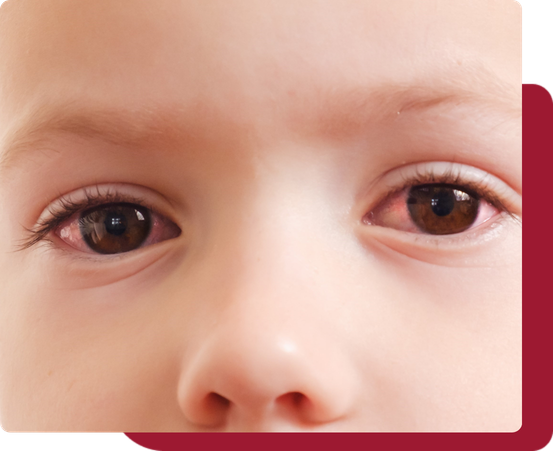
Conjunctivitis (Pink Eye)
Conjunctivitis, more commonly known as pink eye, is an inflammation or infection of the conjunctiva (a transparent membrane) that lines the white part of your eye and the inside of the eyelids. This causes the tiny blood vessels to make your eyes look reddish or pink. Since the condition can be contagious, it is important to get diagnosed and treated by an Optometrist or Ophthalmologist as early as possible to prevent spreading it to others.
Conjunctivitis (Pink Eye) FAQs
What are symptoms of conjunctivitis?
The most common symptoms of conjunctivitis include the following in one or both eyes:
- Redness
- Itching or burning sensation
- A gritty feeling (foreign body sensation)
- Increased tear production
- Discharge of pus or mucus that forms a crust while you sleep that may make it difficult to open your eyes when you wake up
What causes conjunctivitis?
There are several factors that may cause conjunctivitis. These may include:
- Viruses
- Bacteria
- Allergies
- A chemical solution splashed in the eye
- Foreign objects in the eye
- A blocked tear duct (typically in newborns)
Are there different types of conjunctivitis?
Yes, the different types of conjunctivitis result from the different root causes.
- Viral Conjunctivitis: This type of conjunctivitis can occur with a cold, flu, or other respiratory infection and usually begins in one eye, spreading to the other eye within days. Any discharge associated with this form is typically more watery than thick.
- Bacterial Conjunctivitis: This type is more commonly associated with discharge of pus, which can lead to the eyelids sticking together. It sometimes occurs in conjunction with an ear infection.
- Allergic Conjunctivitis: This usually occurs in both eyes and can produce intense itching, burning, tearing, and swelling in the eyes. It may even occur along with symptoms of allergies, like sneezing, scratchy throat, itchy nose, or asthma.
Can there be complications involved with conjunctivitis?
In children and adults, conjunctivitis can cause inflammation in the cornea that can potentially negatively affect vision. Prompt evaluation and treatment by your doctor for eye pain, a foreign body sensation, blurred vision, or light sensitivity can greatly reduce the risk of complications.
How is conjunctivitis treated?
Treating conjunctivitis depends on the type you have.
For viral conjunctivitis, there are no specific treatments. Your body will fight off the virus on its own, but a cool, wet washcloth applied to the eyes can help with any discomfort.
With bacterial conjunctivitis, your eye doctor may prescribe antibiotic drops depending on how severe your symptoms are.
Conjunctivitis brought on by allergies may be eased with certain eye drops recommended or prescribed by your doctor.
If the conjunctivitis is caused by a chemical or other substance in your eye, the eye must be rinsed with clean water immediately and thoroughly. Consult with an eye care professional right away if rinsing doesn’t alleviate the problem. Certain eye drops or ointments may be recommended.
Conjunctivitis usually goes away on its own within one to two weeks. If your symptoms last longer than that, you should see your doctor at EyeCare Optical as soon as possible.
How do I prevent the spread of conjunctivitis?
Practicing good hygiene is essential in controlling the spread of conjunctivitis. For instance:
- Refrain from touching your eyes with your hands.
- Wash your hands thoroughly and often.
- Use a clean towel and washcloth daily.
- Don’t share towels or washcloths with others.
- Wash and change your pillowcases often.
- Throw away eye cosmetics used during a flare-up, such as mascara.
- Never share eye cosmetics or other personal eye care items.
Conjunctivitis is no more contagious than the common cold, so it’s usually okay to return to work, school, or childcare if you’re unable to take time off – just be sure to stay consistent in your good hygiene practices.