- Call Us Today! (865) 584-0905

Optomap Retinal Exam
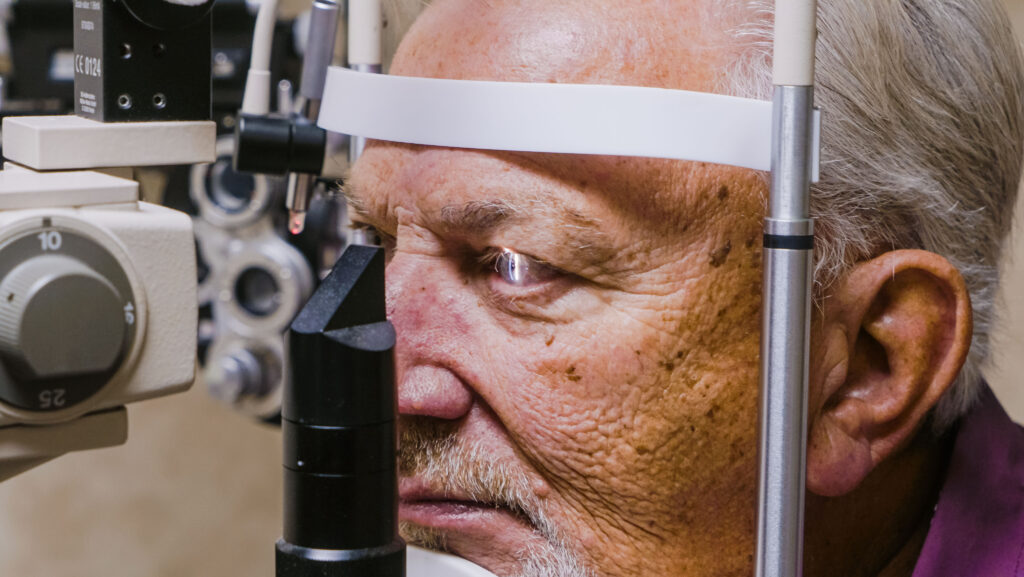
An Eye Exam Without Dilating Your Eyes
For patients who want to avoid the discomfort associated with a dilated eye exam, there is an alternative: the Optomap Retinal Exam.

What is Optomap®?
Optomap® imaging is a panoramic digital image of the retina created using advanced scanning laser technology. This patient-friendly exam provides a detailed view of the retina without the need for dilation drops, the traditional method of retinal examination.
Fast, painless, and comfortable – nothing touches the eye. Optomap imaging is safe and suitable for patients of all ages.
Optomap FAQs
What happens during the Optomap exam?
During the exam, simply look into the device one eye at a time (like looking through a keyhole). The optometrist technician gently positions your head so you are looking at the ball in the middle of the circle and takes a photo – capturing the image in seconds. You will see a comfortable flash of light to let you know the image of your retina has been taken. The process is repeated with the other eye.
How does Optomap work?
Optomap images are created by non-invasive, low-intensity scanning lasers that encompass a widefield digital image of the retina without dilation drops. The image can then be filtered, allowing various layers of the retina to be evaluated. The digital image lets the eye care professional review it for a quick evaluation. The image is stored for future comparisons.
Why is it important to have the retina examined?
The retina (located in the back of your eye) is the only place in the body where blood vessels can be seen directly.
In addition to eye conditions, such as glaucoma, retinal detachment, macular degeneration, eye tumors or eye cancer, signs of other diseases, such as stroke, heart disease, hypertension and diabetes, can also be seen in the retina. Early signs of these conditions can show on your retina long before you notice any changes to your vision or feel pain.
A traditional exam with dilation is especially important if you’re at high risk of retinal issues. During a laser retina scan, such as Optomap, your eyes might or might not be dilated. Although these laser retina scans can detect some retinal abnormalities, the scans have limitations.
Who is a good candidate for Optomap?
- Almost everyone is a good candidate – just to name a few:
- Patients who can’t or don’t want to be dilated
- Children
- Patients with a history of eye problems (such as diabetic retinopathy or glaucoma)
- Patients who are light sensitive
What is the cost of this exam? Is it covered by insurance?
The cost for an Optomap exam is $39.
As a general rule, if the images are taken as baseline documentation of a healthy eye or as preventative medicine to screen for potential disease, then it is not covered by most health insurance plans, including Medicare.